
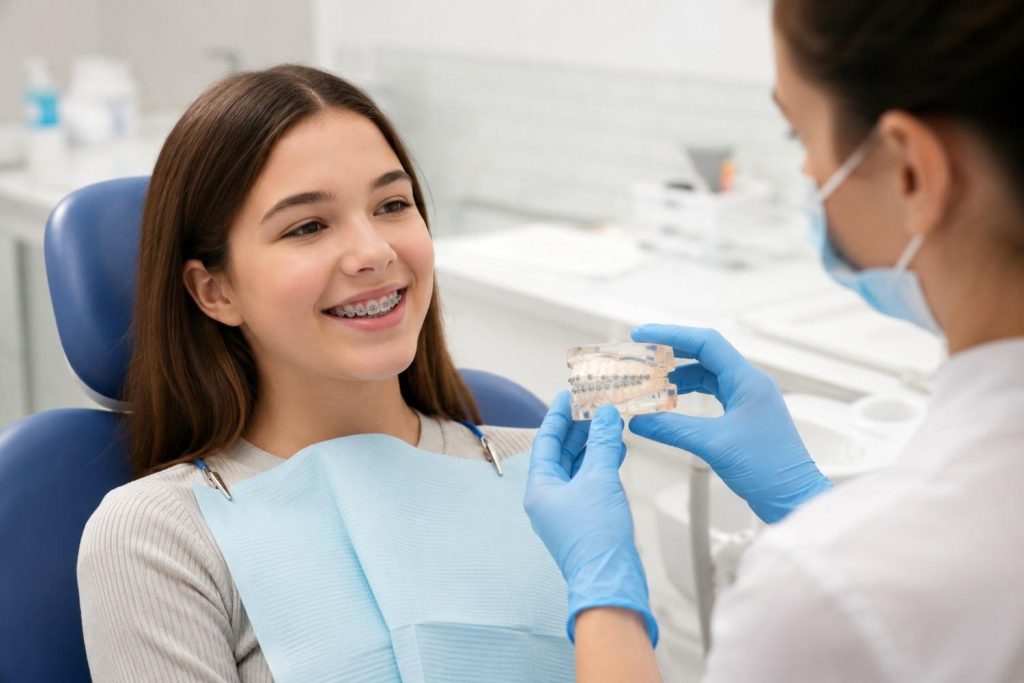
Orthodontic treatment helps move teeth into a straight and healthy position. It also improves bite alignment and jaw function. Many people look for orthodontics for beginners information to understand how treatment works. This guide explains the process in simple words for better understanding. Orthodontic care is often suggested by a dental specialist when teeth are crowded, crooked, or have gaps. A proper dental plan can improve both oral health and smile appearance. People often search for orthodontic treatment near you to find nearby dental care options and start timely treatment.
What is Orthodontic Treatment?
Orthodontics is a special area of dentistry. A regular dentist focuses on cleaning teeth and treating cavities, while an orthodontist focuses on moving teeth into the correct position.
When teeth grow in crowded, crooked or with large gaps, chewing can become harder. It can also make proper tooth cleaning difficult, leading to plaque buildup and gum problems. Orthodontic treatment uses gentle, steady pressure over time to slowly move teeth into a healthier, straighter position.
A children’s dentist in Maple may also check early signs of alignment problems in kids and guide families about when orthodontic care may be needed.
Why Do People Need This Treatment?
People visit an orthodontist for a few main reasons. Each reason connects to how the teeth fit together inside the mouth.
- Malocclusion: This is the medical word for a “bad bite.” It means the upper and lower teeth do not meet properly when the mouth closes.
- Crowding: This occurs when there is not enough room in the jawbone for all the permanent teeth to fit normally.
- Overbite and Underbite: An overbite is when the top front teeth stick out too far over the bottom teeth. An underbite is when the lower teeth sit in front of the upper teeth.
Fixing these issues helps you chew food better, protects your teeth from breaking, and makes your smile look great.
The Tools Used to Straighten Teeth
To move teeth, professionals use special tools called appliances. Here are the most common types:
1. Traditional Braces
These are the most common tools. A dentist attaches small metal blocks called brackets to the front of each tooth. Then, a thin metal wire connects all the brackets. The wire is tightened periodically to push the teeth in the right direction.
2. Clear Aligners
These are removable, clear plastic trays that fit tightly over the teeth. They are nearly invisible. A person wears a series of these trays, changing to a new set every one or two weeks as the teeth move.
3. Retainers
Once teeth have been moved into a straight position, the main treatment phase is complete. But teeth naturally tend to shift back toward their original position over time. To prevent this, a retainer is used.
A retainer is a custom made device, usually made of plastic, sometimes with a thin wire. It is typically worn at night and helps hold the teeth in their new, correct alignment so they do not move back out of place.
When is the Best Time to Start?
People of all ages can get their teeth straightened. However, starting early can make the process much easier.
It is recommended that children have an evaluation by age seven. At this stage, the jawbone is still growing, making it easier to guide teeth into the right places. If you are looking for help for a child, searching for a children’s dentist or a pediatric dentist near you is an excellent first step. These professionals specialize in young mouths and can tell you if early treatment is needed.
Finding Orthodontic Treatment Near You.
Starting this journey is simple. To find the right care, search for orthodontic treatment near you to locate a qualified clinic. At Dental Works 4 Kids, we make this process easy and comfortable for children and families.
During the first visit, we take X-rays and digital photos of the mouth. This helps us create a clear and personalized treatment plan for your child’s teeth. We explain every step in simple words so parents and kids feel confident about the treatment plan from the very beginning.
If you are ready to begin your child’s smile journey, book an appointment with us at Dental Works 4 Kids today. Our team is here to guide you, answer your questions, and help you choose the right orthodontic care for your child.
Frequently Asked Questions
Does getting orthodontic treatment hurt?
Putting braces or aligners on the teeth does not hurt. However, after the wires are tightened or when a new tray is started, the teeth can feel sore for a few days. This soreness goes away quickly.
How long does the treatment take?
Every month is different. On average, most patients wear braces or clear aligners for twelve to twenty-four months.
Can a person still eat normal food with braces?
With traditional braces, sticky foods like caramel and hard foods like whole apples must be avoided, as they can damage the brackets. With clear aligners, the trays are removed before eating, so any food is fine.
How often are dental visits required during treatment?
Most patients need to visit the clinic every 4 to 8 weeks so the dentist can check progress, adjust the wires, or provide new aligners.
Is it necessary to brush teeth more often with braces?
Yes. Food can easily get stuck in brackets and wires. Brushing after every meal helps prevent plaque buildup, cavities, and gum irritation. Good cleaning habits are very important during treatment, especially for those learning orthodontics for beginners.